By Wine Label · Published 14 September 2026 · 2 minute read
Start with the intended use
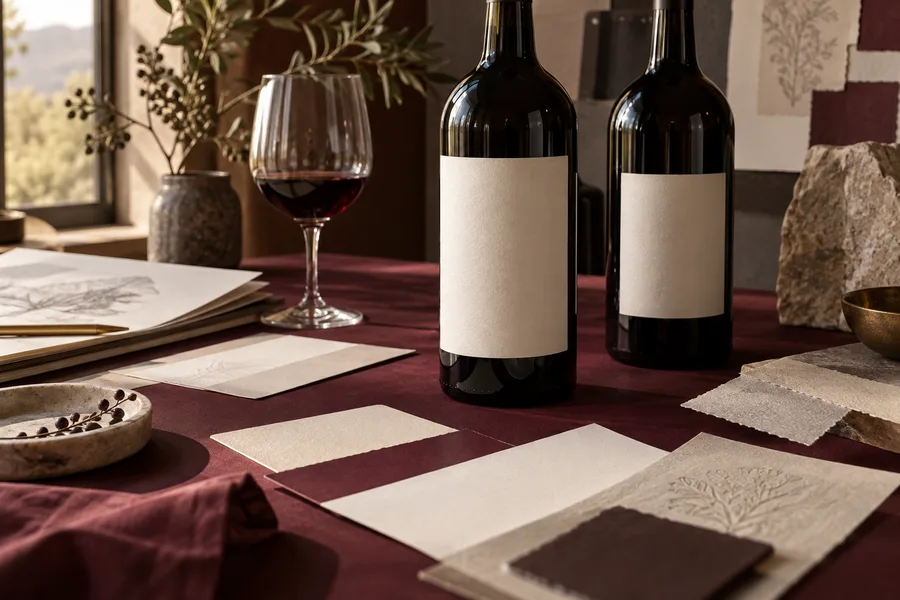
A successful wine label begins with the bottle. Measure the flat area available, its curvature and the intended front and back positions. A design that fits one bottle may crease on another. Specify whether labels will be applied before chilling or exposed to moisture, because paper, adhesive and finishing choices need to suit that environment. Send the artwork and finished dimensions together so the printer can allow for bleed and trimming.
Compare the complete specification
Personalised wine labels can carry a company message, event identity or individual names. Proofread every version and approve the final size before production. Do not assume a packaging listing includes a bottle of wine: the catalogue here identifies boxes, totes and accessories separately. Bottle sourcing, label application and any wine supply must be specifically confirmed in the quotation. Keep the original producer and product information visible where required; custom branding should be planned around the supplied bottle information.
Build a useful shortlist
A useful shortlist records the exact product name alongside the specification that made it suitable. Compare wine gift packaging. Keep questions about missing details with the item rather than filling the gaps from a similar photograph. If two models seem interchangeable, ask which specification differs and how that affects your intended use.
More buying notes
Planning an Order for Custom Wine Labels And Wine Gift Packaging